ST. LLAMAR
HERITAGE SOCIETY
ARTS & CULTURE - PERFORMANCES - MUSIC
WRITERS & AUTHORS - CHARITY
BERLIN - LONDON
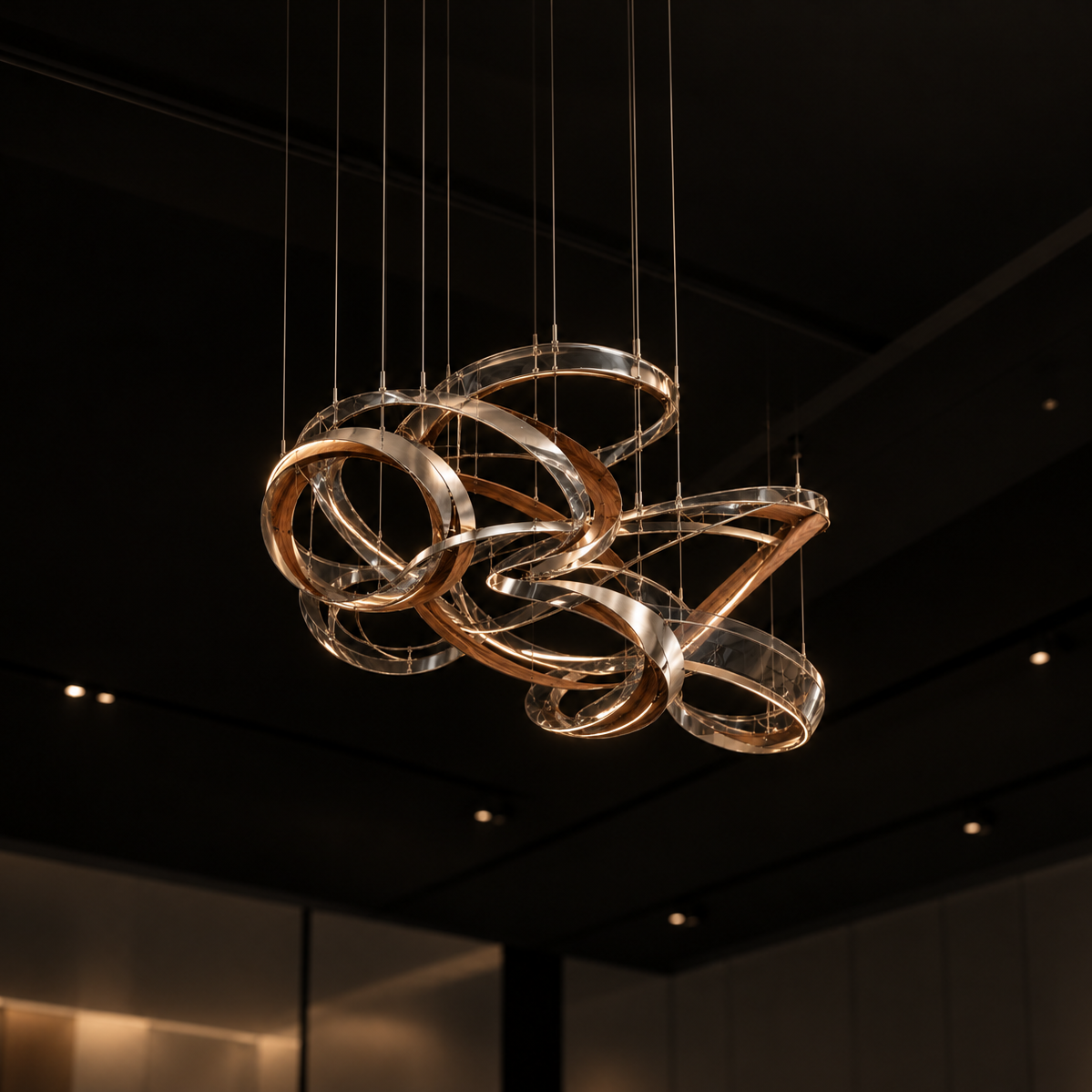
0R3Z
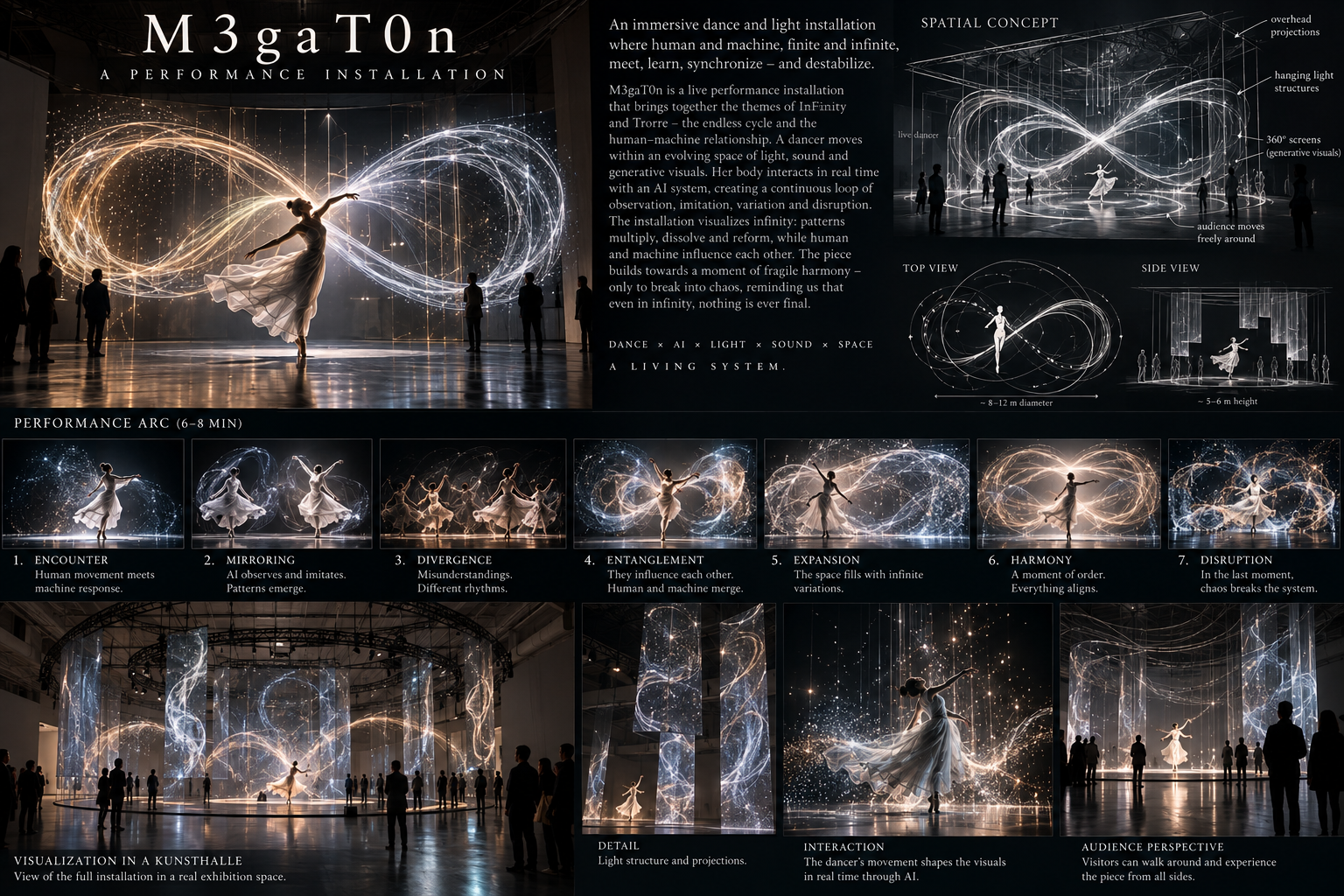
0R3Z is a choreographic and spatial exploration of transformation.
Human, machine and environment enter into a continuous exchange: movement becomes information, information becomes response, and response alters the conditions from which the next movement emerges.
Nothing remains entirely itself.
Rooted in ballet and contemporary movement, the work approaches the body not simply as performer, but as an active element within a larger system—observing, adapting, disrupting and being transformed in return.
Repetition never produces the same result twice.
A gesture returns altered.
Order becomes instability.
Synchronization becomes deviation.
An ending becomes the condition for another beginning.
0R3Z does not represent transformation.
It exists through it.
Section Performance
Math behind 0R3Z
The equations appearing within 0R3Z are deliberately restricted to established mathematical structures drawn from dynamical systems, information theory, synchronization theory, reaction–diffusion systems and non-equilibrium thermodynamics.
They are not presented as a new physical theory, nor as a scientific explanation of consciousness.
Instead, mathematics functions as a second artistic language alongside choreography.
Where choreography describes transformation through the body, mathematics describes transformation through relationships between states.
This distinction is essential to the conceptual integrity of the work.
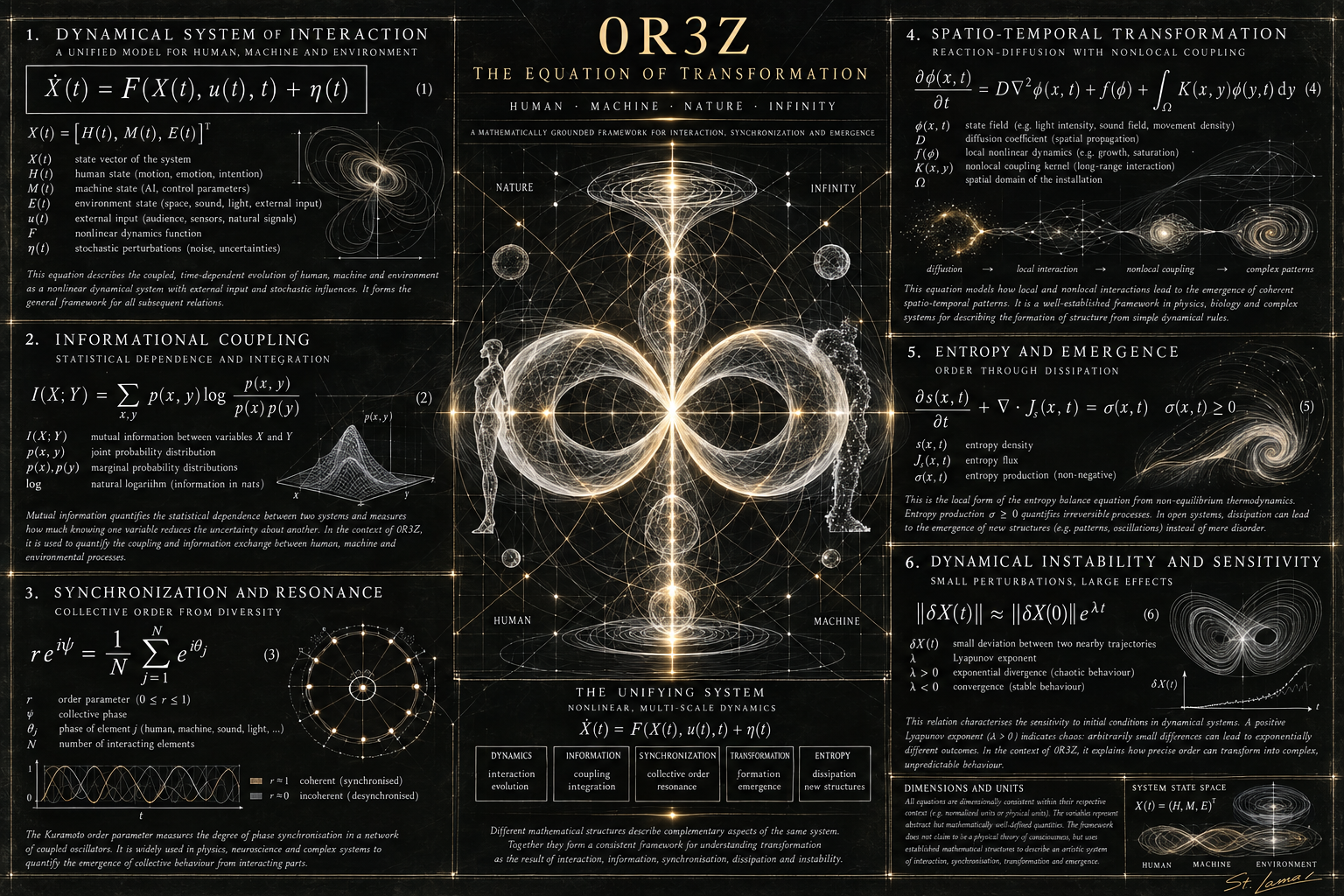
0R3Z — THE EQUATION OF TRANSFORMATION
Curatorial Concept Statement
0R3Z — The Equation of Transformation is a transdisciplinary installation and performance project situated at the intersection of contemporary art, choreography, artificial intelligence, mathematics, sculpture, light and spatial experience.
At its core, the work investigates a fundamental question:
What happens when human, machine and environment cease to function as separate entities and begin to behave as parts of one continuously transforming system?
Rather than representing artificial intelligence as either a tool or an antagonist, 0R3Z treats human and machine as interacting states within a larger dynamic structure. Neither remains unchanged by the encounter. Movement becomes information; information produces response; response changes the environment; and the altered environment, in turn, changes the human.
The exhibition therefore does not describe transformation. It performs transformation.
From InFinity and Trorre to 0R3Z
The project originates from two complementary choreographic ideas.
InFinity explores repetition, cycles and the impossibility of a definitive ending. A movement returns, but never under precisely identical conditions. Repetition therefore becomes variation: the apparent return to an origin is already a transformation.
Trorre investigates the relationship between human and machine. Observation becomes imitation, imitation becomes conflict, conflict becomes adaptation, and adaptation eventually produces synchronization. At the moment when a seemingly stable equilibrium has been achieved, however, a minimal deviation destabilizes the system and order collapses into a new state.
Infinity is understood not as endless repetition of the same, but as endless transformation through recurrence.
The Exhibition as a Living System
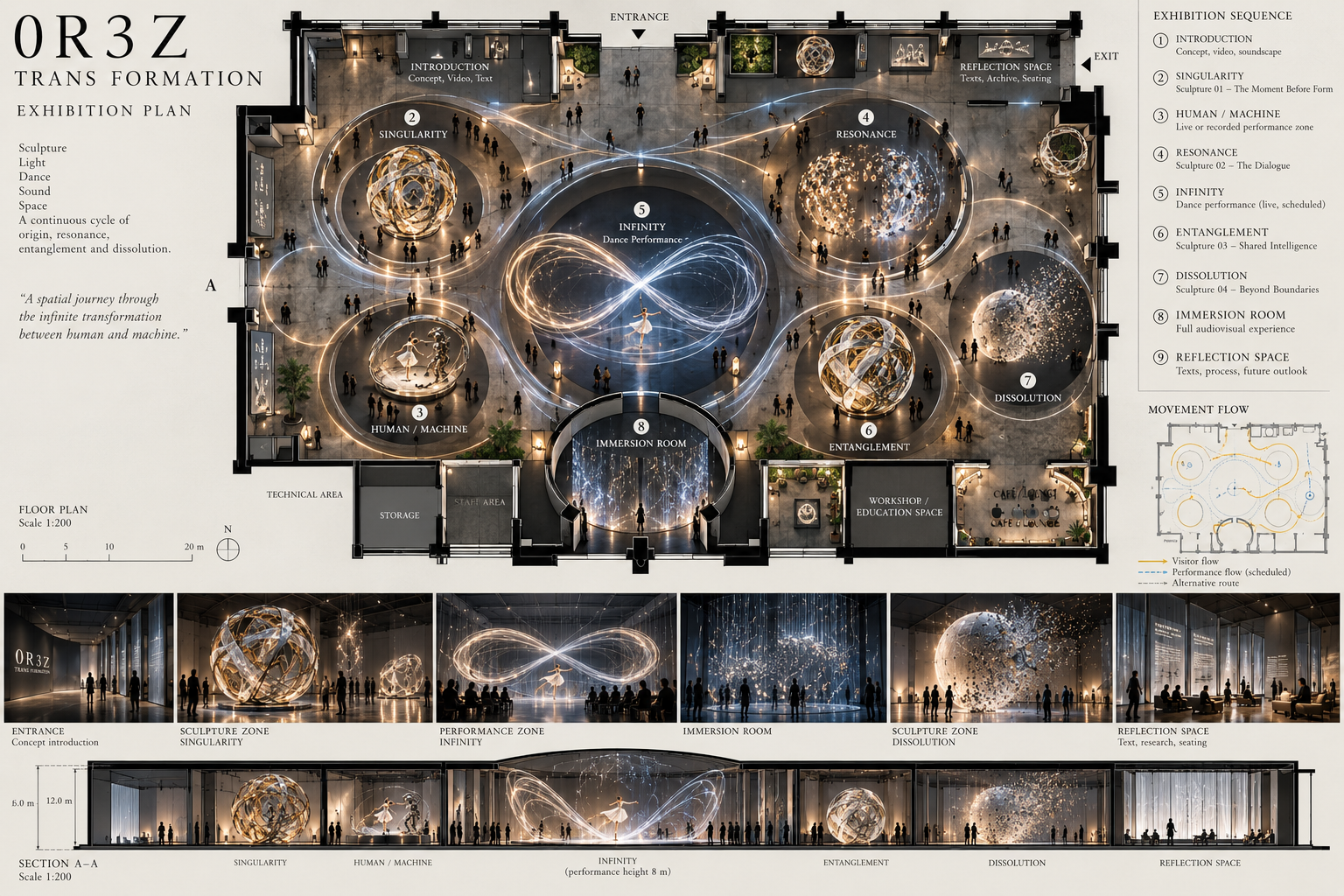
The exhibition is conceived not as a sequence of autonomous objects, but as an interconnected spatial system consisting of sculpture, human movement, machine-generated response, sound, projection, light and audience presence.
The visitor enters a field of relationships.
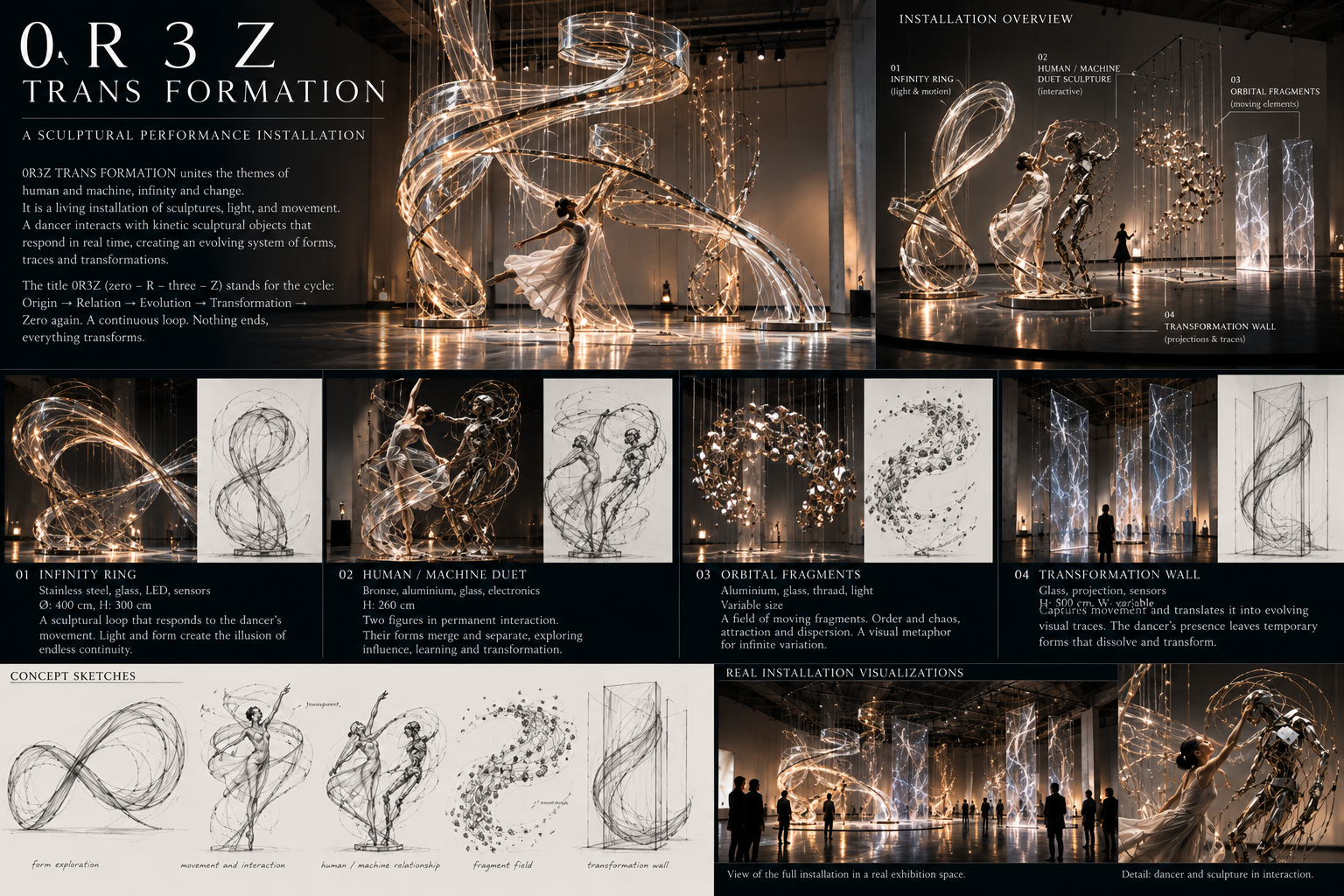
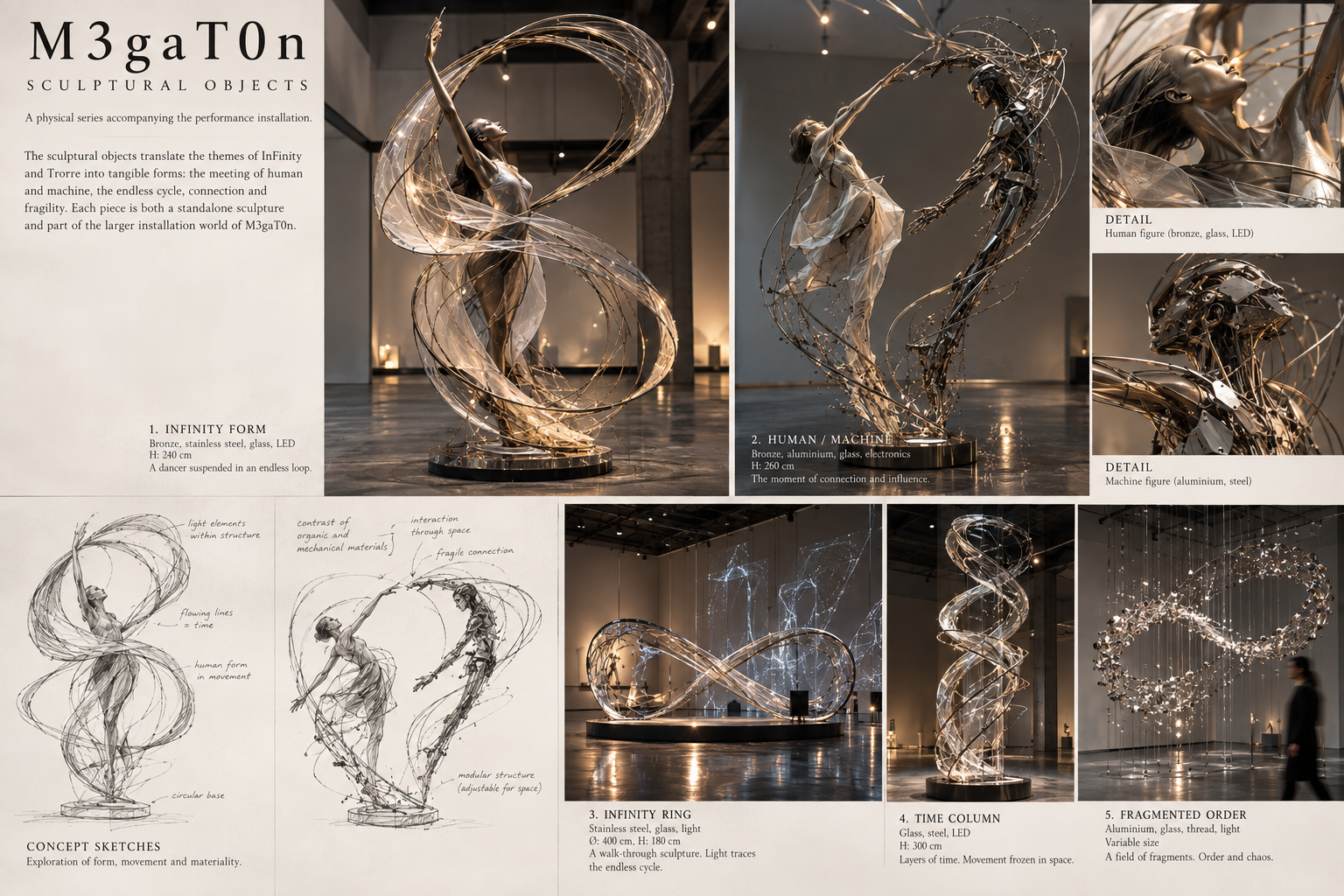
Spherical and orbital sculptures suggest closed systems while simultaneously refusing complete closure. Möbius-like structures, loops, fragmented spheres and rotating geometries repeatedly lead the eye back toward their point of origin without ever resolving into a conventional beginning or end.
The dancer activates this environment.
Her position, velocity, rhythm and movement can function as input variables. These signals may influence light, sound, projection or kinetic elements. The machine consequently responds to the performer, while the performer perceives those responses and adjusts her movement.
A feedback loop emerges:
Human→Machine→Environment→Human→⋯
The artwork is therefore not entirely predetermined. Its identity lies partly in the rules governing transformation rather than in a single fixed visual state.
Why Mathematics?
The equations appearing within 0R3Z are deliberately restricted to established mathematical structures drawn from dynamical systems, information theory, synchronization theory, reaction–diffusion systems and non-equilibrium thermodynamics.
They are not presented as a new physical theory, nor as a scientific explanation of consciousness.
Instead, mathematics functions as a second artistic language alongside choreography.
Where choreography describes transformation through the body, mathematics describes transformation through relationships between states.
This distinction is essential to the conceptual integrity of the work.
1. Interaction — Dynamical Systems
The fundamental model is: see formula 1
Here, X(t) represents the evolving state of the installation; u(t) represents external input, such as performer or audience interaction; and η(t) represents unpredictable or stochastic influences.
Conceptually, this establishes the central proposition of 0R3Z:
the artwork is a state in continuous evolution rather than a finished object.
Human, machine and environment become components of the same dynamic system without being reduced to the same thing.
2. Information — Mutual Information
The project employs mutual information,
see formula 2
as a model for statistical dependence between interacting systems.
In the installation, it can be understood as a formal representation of the degree to which changes in one component correspond to changes in another.
The artistic question becomes:
At what point does observation become relationship?
A dancer produces movement. A machine detects it. The machine changes its behaviour. The dancer perceives that change.
Information has become interaction.
3. Synchronization — The Kuramoto Order Parameter
Synchronization is represented by the established Kuramoto order parameter:
see formula 3
The parameter rr describes the degree of collective synchronization.
When
r≈0
the system is largely incoherent.
When
r≈1
its components approach synchronization.
This mathematical transition corresponds directly to the dramaturgical structure of the performance. Human movement, machine behaviour, light and sound begin independently and gradually establish a shared rhythm.
Importantly, synchronization is not presented as the final ideal state.
Perfect order is temporary.
4. Transformation — Reaction, Diffusion and Coupling
Spatial transformation is represented through a reaction–diffusion model extended by non-local coupling:
see formula 4
This formulation allows local events to generate consequences elsewhere in the system.
Within the installation, the principle becomes spatial: a movement performed in one location may influence light, projection or sound in another.
The individual gesture therefore exceeds the body that produced it.
A local action becomes a global transformation.
5. Entropy and Emergence
The local entropy balance is represented as
see formula 5
Here entropy is not used colloquially as a synonym for “chaos.”
Instead, the work draws on the more productive idea that open, dissipative systems can generate organized structures while exchanging energy and information with their environment.
This produces one of the central paradoxes of 0R3Z:
Order and disorder are not opposites. One can emerge from the other.
The sculptures embody this visually. Some appear to assemble from fragments; others seem to be simultaneously forming and dissolving. The sphere—the archetype of completion—is repeatedly opened, divided, penetrated or destabilized.
6. Instability — The Final Transformation
The performance culminates in a state of apparent equilibrium.
Human and machine have learned one another. Movement, light and sound approach synchronization. The installation appears to have solved itself.
Then a minimal deviation occurs.
Its amplification is represented by the standard relation associated with sensitivity to initial conditions:
see formula 6
For a positive Lyapunov exponent,
λ>0,\lambda>0,
nearby trajectories can diverge exponentially.
This provides the conceptual mechanism for the final moment of the performance.
A tiny difference becomes consequential.
Synchronization fractures.
The established choreography destabilizes.
The system enters a state that could not have been completely inferred from its apparently ordered condition immediately beforehand.
And then:
blackout.
The work does not return to zero.
It returns to possibility.
The Sphere
The recurring sphere is the principal sculptural archetype of 0R3Z.
Historically and geometrically, the sphere suggests unity, completion and perfection. The project deliberately destabilizes that symbolism.
The Singularity Sphere contains multiple possible trajectories within a single body.
The Resonance Sphere divides into mutually responsive structures.
The Entanglement Sphere allows organic and technological geometries to penetrate one another.
The Dissolution Sphere appears to lose its own boundary and disperse into space.
The sphere therefore evolves from object into process.
Its apparent perfection becomes unstable.
The Human Body
Against these large technological and geometric structures stands the human body.
It is deliberately vulnerable, temporal and finite.
The body cannot repeat a movement with mathematical identity. Every repetition contains microscopic differences caused by breath, balance, fatigue, perception and intention.
Rather than treating these differences as errors, 0R3Z makes them productive.
The machine tends toward repeatability.
The human introduces variation.
The machine learns variation.
The human learns structure.
Neither simply conquers the other.
Their encounter produces a third condition that belongs completely to neither.
The Meaning of “0R3Z”
The title functions as both name and conceptual code.
0 suggests origin, absence, potential and reset.
R suggests relation, resonance and return.
3 introduces a third state: not human versus machine, but the emergent condition produced through their interaction.
Z suggests an endpoint while simultaneously refusing one—the apparent final coordinate before another transformation begins.
The title can therefore be read as a cycle:
Origin→Relation→Emergence→Transformation→Origin
The prime is important.
The system may return, but it never returns unchanged.
Curatorial Position
0R3Z does not attempt to illustrate science, nor does it use scientific vocabulary to claim objective answers to metaphysical questions.
Its proposition is more specific.
It asks what happens when the formal structures through which science describes interaction, information, synchronization, emergence and instability are translated into bodily, sculptural and spatial experience.
Mathematics becomes structure.
Choreography becomes information.
Sculpture becomes a temporary state.
Artificial intelligence becomes a participant.
The exhibition space becomes a system.
The audience encounters not an image of infinity, but a process that repeatedly approaches completion and escapes it.
In this sense, infinity within 0R3Z is not endless duration.
It is the impossibility of a final state.
Nothing repeats without changing.
Nothing transforms without leaving a trace.
Every end alters the conditions of the next beginning.
0R3Z is therefore conceived not as an exhibition about transformation, but as an exhibition that exists through transformation.
Independent · Non-commercial
" My work is not about expression in the conventional sense, but about creating conditions where meaning can emerge—without explanation, without reduction.
I am interested in what remains when structure is present, but interpretation is open."
This website serves solely as a non-commercial platform for the presentation and documentation of the artist’s works, projects, and ideas. It functions as an informational resource and digital showcase of the artist’s creative practice.
Many of the works, concepts, and projects presented here are currently in development, work in progress, or remain at the conceptual or idea stage. The content reflects an ongoing artistic process and should be understood as part of the artist’s evolving creative research and experimentation.
St. Llamar serves as the artistic lab and umbrella for these projects—a space for artistic exploration, experimentation, and the development of interdisciplinary concepts and works.
No commercial services, sales activities, investment opportunities, or other business transactions are offered, facilitated, or conducted through this website.
The content provided is for informational and artistic purposes only and does not constitute an offer to sell, solicit, or enter into any commercial, financial, or contractual arrangement.